
European Tank Terminals: Structural Realignment and the Case for Strategic Repositioning
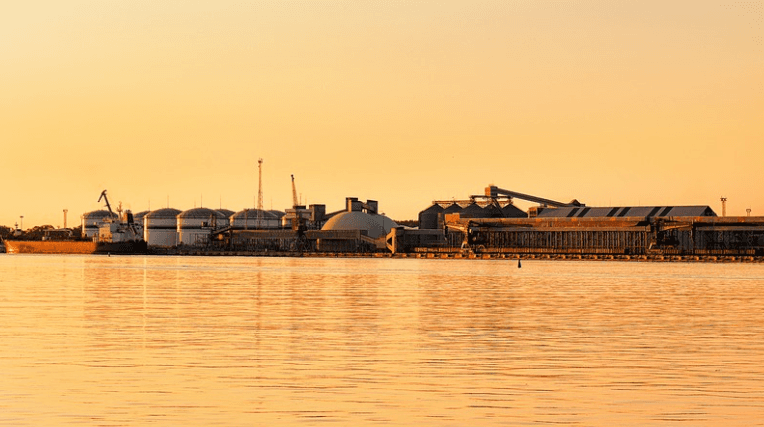
For decades, Europe's tank terminals grew alongside a refining system that produced, traded and exported hydrocarbons at scale. That model is changing fast. Demand for crude-derived fuels is declining, renewable liquids are taking a growing share, and a wave of petrochemical closures is reshaping chemical flows unevenly across the continent.
Terminals still matter, and in some respects they matter more than before. As Europe produces less of its own fuels and chemicals, it relies more on terminals to secure imports, and they also underpin the storage, blending and bunkering of the renewable fuels needed to decarbonise shipping and aviation. The question for owners and investors is not whether terminals remain relevant. It is which assets can adapt quickly enough to stay advantaged.
ARA remains the centre of gravity
The Amsterdam-Rotterdam-Antwerp (ARA) cluster is still Europe's most important liquid bulk hub. It combines deepwater access, pipeline connectivity and barge networks serving the refining and petrochemical clusters of the Rhine corridor and Germany's Ruhr region. Rotterdam alone handled 197 million tons of seaborne liquid bulk in 2025, more than two and a half times Antwerp-Bruges at 73 million tons. Across Europe's major ports, fuels make up more than 80% of the products transported.
That concentration in fuels is the source of both strength and exposure.
Fuels: decline, displacement and new liquids
Electrification is steadily eroding diesel/gasoil demand in passenger and commercial vehicles. Western Europe has long been a large net importer of diesel/gasoil, but its import needs are expected to fall from 34 million tons in 2026 to 19 million tons in 2030. That is a significant loss of throughput for terminals built around those flows.
Gasoline faces a different pressure. Western Europe has historically exported its gasoline surplus from ARA to the US East Coast, West Africa and Latin America. The 650 kb/d Dangote refinery in Nigeria now competes directly for that trade, having substantially increased throughput after a major turnaround in early 2026, and with a planned expansion to double capacity. Western Europe gasoline demand is expected to peak by 2030.
Jet fuel is the exception. Demand is expected to keep rising, and from the mid-2030s, growth in sustainable aviation fuel (SAF) is set to more than offset falling refinery supply.
Renewable fuels bring their own storage requirements. EU feedstock rules under the Renewable Energy Directive favour waste and residue feedstocks listed in Annex IX, and double counting toward transport obligations is pulling used cooking oil, tallow and qualifying residues into both FAME and hydrotreated biofuels. Hydrotreated fuels such as renewable diesel and HEFA-SAF are drop-in components that can be blended at far higher levels than FAME, which is generally capped at 7% in EN 590 road diesel. For terminals, this means more demand for segregated storage, blending and certification-controlled logistics, and a real case for retrofitting existing tanks.
Chemicals: diversification, with caveats
Chemicals storage has long offered terminals a way to reduce their exposure to fuels. That case is now more complicated. Weak demand, high energy and feedstock costs, carbon costs and competition from lower-cost producers in the US, Middle East and Asia have driven a wave of closures, sales and mothballing across the EU. Some announced closures will not take effect until 2028.
Since 2022, EU chemical exports have contracted across the value chain. Polymer imports have risen, but bulk chemical imports have slightly declined as weaker downstream production reduced demand for feedstocks.
The broad trend is less useful than the local detail. Each chemical cluster is integrated in its own way. In some, closures have reduced trade across the whole value chain. In others, upstream closures have outpaced downstream ones and created new local demand for imported feedstocks. For terminal operators, chemicals customer risk has to be assessed one cluster at a time.
Location will decide who wins
The sector is moving from a model built around refinery-linked hydrocarbon flows to one defined by import dependence, product flexibility and optionality in transition fuels. In that shift, location is a key differentiator. Terminals with deepwater access on major shipping routes are better placed to move into renewable bunker fuels, and sites with pipeline access to airports could become SAF-blending hubs.
The operators we speak to are working through four questions:
Which assets are most exposed to declining gasoline and diesel/gasoil flows, and what is the credible alternative use case?
Where can existing capacity be retrofitted for renewable fuels?
What customer risk does chemicals storage carry, given closure risk across Europe?
Which long-term partnerships with producers and consumers of renewable fuels are critical to success?
Read the full analysis
Our thought piece, European Tank Terminals: Structural Realignment and the Case for Strategic Repositioning, sets out the evidence behind these shifts. It includes six exhibits covering port throughput, fuel demand and trade balance forecasts, biofuel feedstocks and applications, EU petrochemical closures since 2023, and extra-EU chemical trade from 2015 to 2025.
If you are assessing retrofit options, testing your exposure to chemical closures or looking for renewable fuel partners, our team can help you work out which of your assets stay advantaged.
Speak with our experts: Game Achakulwisut (g.achakulwisut@fgenexanteca.com) or contact ContactUs@FGENexantECA.com.
About Us - FGE NexantECA is the leading advisor to the energy, refining, and chemical industries. Our clientele ranges from major oil and chemical companies, governments, investors, and financial institutions to regulators, development agencies, and law firms. Using a combination of business and technical expertise, with deep and broad understanding of markets, technologies, and economics, FGE NexantECA provides solutions that our clients have relied upon for over 50 years.
Download the full thought piece