
Beyond the tank: What really separates winning storage terminals from the rest
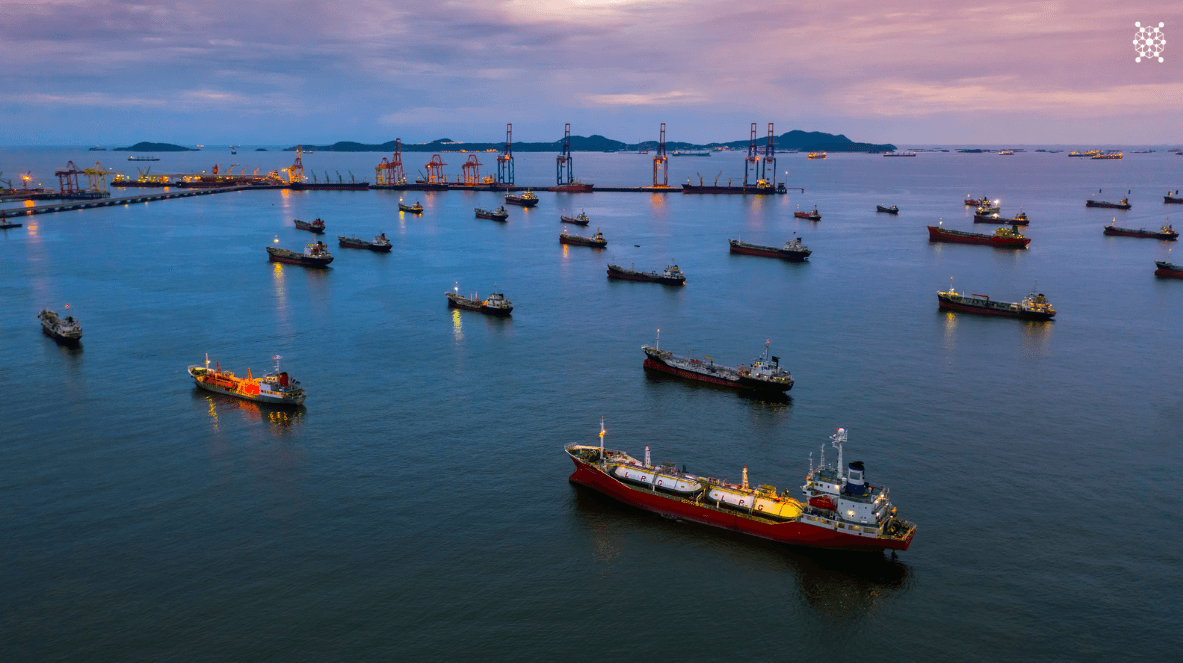
Tank storage is easy to dismiss as a commodity business: steel, concrete and pipework, differentiated mainly by size. Talk to any operator, investor or lender who has been through a downturn, however, and a different picture emerges. Utilisation rates, customer retention and margin resilience vary enormously between terminals in the same region, serving the same markets, built to similar specifications. The difference is rarely the tanks themselves. It is how the asset is positioned, operated and adapted to a market that is shifting faster than at any point in the last two decades.
For operators and investors assessing storage assets today, whether through an acquisition, a greenfield development or a portfolio review understanding what actually drives long-term performance has never mattered more. Based on our work supporting commercial assessments of storage terminals globally, seven factors consistently separate the terminals that command premium rates and long-term contracts from those that compete purely on price.
Scale and flexibility set the ceiling on what a terminal can capture
Larger terminals with multi-product storage capability capture economies of scale that smaller, single-product sites simply cannot reach. But scale alone is not the full story. As trade flows and product demand shift, accelerated by refinery closures, changing fuel specifications and the energy transition, the terminals best placed to respond are those built with the flexibility to reallocate tankage between products rather than those locked into a single use case. Flexibility is increasingly a hedge against demand uncertainty, not just an operational nice-to-have.
Location still drives the commercial fundamentals
Proximity to major trade routes, refining and petrochemical hubs, or end-use demand centres continues to determine competitive intensity, customer mix and achievable storage rates. Terminals in strategically located hubs benefit from deeper liquidity and a broader customer base; those in more peripheral locations must work harder to justify their rates through service quality or specialisation. Location decisions made a decade ago are now being tested by shifting trade patterns, a factor investors should weigh carefully in any acquisition or expansion case.
Utilisation is the number that matters most
Storage contracts typically account for over 80 percent of terminal revenues, which makes utilisation the single most important driver of financial performance. High utilisation depends on more than physical capacity, it reflects contract structure, customer relationships, and how well an asset's product mix is matched to market demand. A terminal running at 65 percent utilisation and one running at 90 percent can look identical on a site visit; their return profiles will not be.
Operator quality builds the credibility that underpins long-term contracts
A strong track record, reputable joint venture partners and durable customer relationships are not soft factors, they are commercial assets in their own right. Long-term storage and throughput contracts are underwritten as much by trust in the operator as by the physical infrastructure. For investors, operator quality is often the clearest signal of whether an asset will retain its customer base through a downturn or a change in ownership.
Infrastructure quality determines operational efficiency and cost
Berth capacity, draft depth, pipeline connectivity and the condition of the facility all affect throughput efficiency and, ultimately, cost per barrel handled. Ageing infrastructure or connectivity constraints can quietly erode a terminal's competitiveness even when headline capacity looks strong, a risk that only becomes visible under close technical and commercial due diligence.
Value-added services create differentiation beyond the tank
Blending, inter-tank transfers, heating and additive injection allow operators to move beyond pure storage economics and capture additional margin. These services also deepen customer relationships, making a terminal harder to displace and less exposed to pure price competition. In a market where storage capacity is expanding in several regions, value-added services are becoming a key lever for defending market position.
Energy transition readiness is no longer optional
The ability to store biofuels and low-carbon fuels, backed by recognised sustainability certifications such as ISCC, is increasingly a condition of doing business rather than a differentiator. Customers and regulators alike are raising expectations, and terminals that have not begun the technical and certification work required to handle these products risk being excluded from an expanding segment of demand. For investors, transition readiness is fast becoming a core underwriting consideration rather than an ESG add-on.
The strategic question for operators and investors
None of these factors operates in isolation, the terminals that perform best combine several of them, reinforcing one another to build a defensible market position. Understanding which factors matter most for a specific asset, region or investment thesis requires a clear-eyed, evidence-based assessment rather than assumptions carried over from the last cycle.
At FGE NexantECA, we have supported numerous commercial assessments of storage terminals for operators and investors, helping them identify the drivers behind high-performing assets and the risks embedded in underperforming ones.
How is your organisation thinking about competitive positioning in the storage terminals space?
About Us - FGE NexantECA is the leading advisor to the energy, refining, and chemical industries. Our clientele ranges from major oil and chemical companies, governments, investors, and financial institutions to regulators, development agencies, and law firms. Using a combination of business and technical expertise, with deep and broad understanding of markets, technologies, and economics, FGE NexantECA provides solutions that our clients have relied upon for over 50 years.
Contact a member of our team to see how we can support your operational, investment, or trading decisions